
Retatrutide. One peptide, three receptors.
Topic tag: Compound Profiles
Read time: 4 min read
On This Page
Key takeaways
GIP, GLP-1, and glucagon are hormones the body already produces. Retatrutide is a synthetic peptide designed to interact with all three receptors in a single molecule.
The triple-receptor mechanism has made Retatrutide one of the most studied compounds in metabolism research over the past several years.
Most metabolic peptides target one receptor. Retatrutide targets three simultaneously, and that distinction is what makes it scientifically significant.
As with all compounds in this range, supplied for preclinical research purposes only.
1. What Retatrutide is
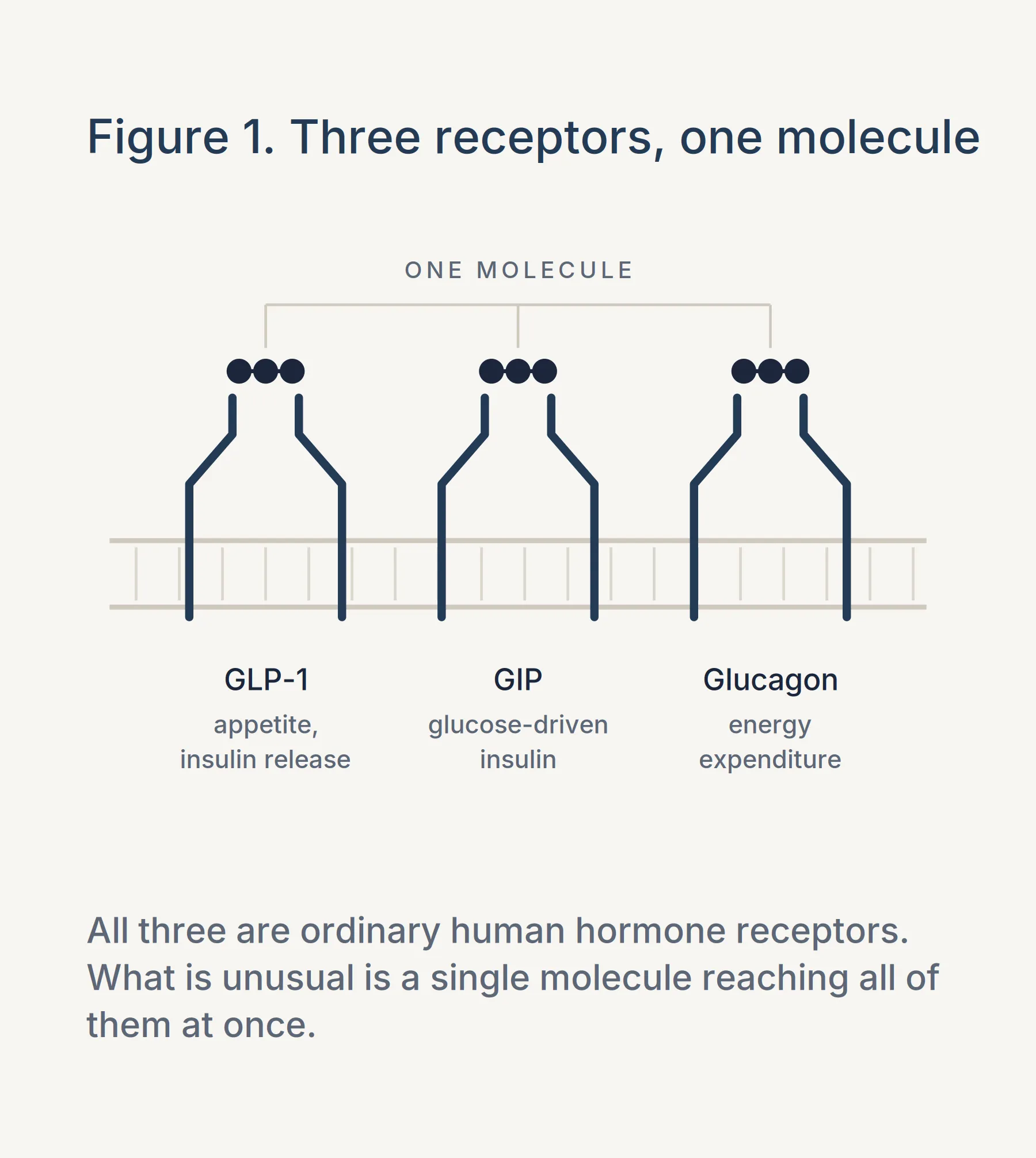
Retatrutide is a synthetic 39-amino acid peptide. It is classified as a triple agonist, meaning it activates three distinct hormone receptors simultaneously through a single molecule. Those receptors are GIP, GLP-1, and glucagon.
Each of those three receptors plays a role in how the body regulates energy, appetite, and glucose. Retatrutide’s ability to engage all three at once, and the balance between them, is the central subject of its research interest.
2. The three receptors, explained simply
Understanding Retatrutide means understanding what each receptor does. None of them are exotic. They are all part of normal human biology.
GLP-1 (Glucagon-Like Peptide-1) A hormone released after eating. It signals to the brain that food has been consumed, stimulates insulin release, and slows the rate at which the stomach empties. Most people who follow metabolic research will have encountered GLP-1, it is the mechanism behind a class of widely discussed compounds.
GIP (Glucose-Dependent Insulinotropic Polypeptide) Also released after eating. Works alongside GLP-1 to support insulin secretion in response to glucose. Research suggests GIP also plays a role in appetite regulation and may reduce some of the gastrointestinal side effects associated with GLP-1 agonism alone.
Glucagon A hormone with a different function to the other two. Where GLP-1 and GIP are primarily associated with insulin response and appetite, glucagon drives energy expenditure, the rate at which the body burns stored energy. In the liver specifically, glucagon activity influences fat metabolism.
3. Why triple agonism matters in research
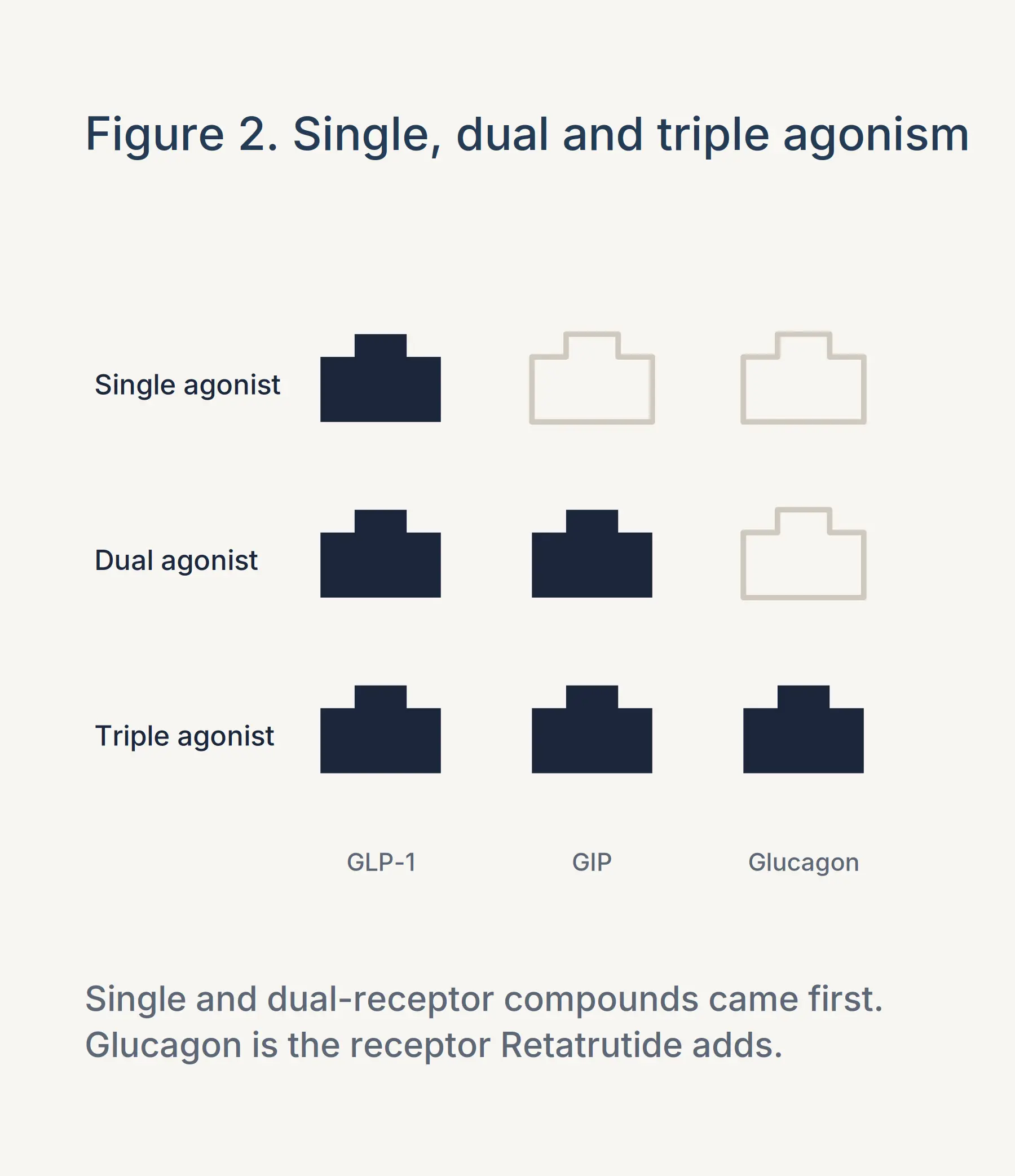
Single-receptor agonists targeting GLP-1 have been studied extensively. Dual agonists, targeting GLP-1 and GIP together, followed. Retatrutide adds the third receptor: glucagon.
The research interest is not simply that more receptors are activated. It is that the three systems interact. GLP-1 and GIP handle glucose response and appetite. Glucagon handles energy expenditure. Engaging all three creates a different metabolic picture than any single or dual combination, and a different set of research questions.
4. What the research explores
Retatrutide has been the subject of preclinical and clinical research across a range of metabolic areas. The scientific interest has centred on several overlapping questions:
Metabolism and energy regulation, how triple-receptor agonism affects the body’s energy systems compared to single or dual-receptor approaches. Preclinical models have investigated energy expenditure, appetite signalling, and the downstream effects of simultaneous receptor activation.
Glucose regulation, how the compound influences insulin response and glucose control. The interaction between GIP and GLP-1 agonism in glucose-dependent insulin secretion is an active area of study.
Liver fat and metabolic health, glucagon receptor agonism has been investigated for its influence on liver fat metabolism, specifically through hepatic fatty acid pathways. Research in this area has examined whether the glucagon component contributes meaningfully to outcomes beyond what GLP-1 and GIP agonism produce alone.
Comparative research, because Retatrutide sits at the intersection of three receptor systems, a significant portion of the research explores how it compares to single and dual-receptor compounds in both efficacy and mechanism. The triple-receptor model is of scientific interest partly because it allows researchers to isolate what each additional receptor contributes.
Most metabolic compounds work on one system at a time. Retatrutide is studied precisely because it does not.
5. A note on research context
Retatrutide is among the most actively researched metabolic peptides in current science. The compound supplied through OPtide is research-grade and intended for preclinical and in vitro research settings only. It is not the clinical drug under investigation by pharmaceutical developers, and the findings from clinical research programmes do not apply to its use in a research context.
All research applications are preclinical. Not for human consumption.
For compound specifications, batch documentation, and storage guidance, see the Retatrutide product page.
Three receptors. One batch record.
Every Retatrutide batch is tested by Janoshik, and the results are published before purchase.