
MOTS-c. A peptide coded by the mitochondria.
Topic tag: Compound Profiles
Read time: 4 min read
On This Page
Key takeaways
MOTS-c is a 16-amino-acid peptide coded in mitochondrial DNA, not in the nucleus.
It was described in 2015. It belongs to a small family of mitochondrial peptides, after humanin in 2001.
It switches on AMPK, a central energy sensor, by an indirect route through the folate cycle.
The preclinical research is broad. Human data is still limited.
1. Two sets of DNA
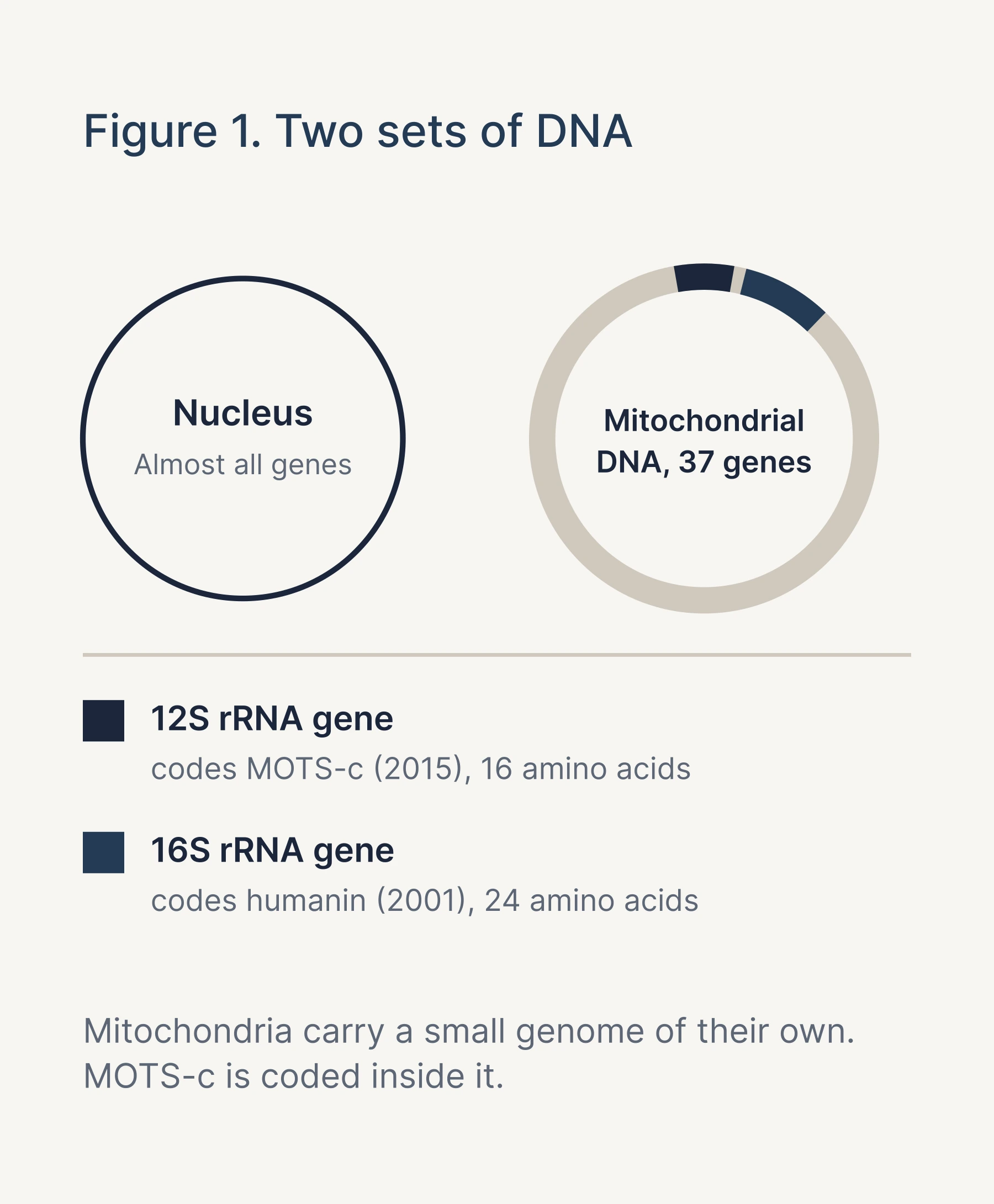
Almost all of a cell’s DNA sits in the nucleus. Mitochondria, the structures that make most of a cell’s energy, carry a small genome of their own.
That genome is tiny. It holds 37 genes: 13 for proteins, 22 for transfer RNAs and 2 for ribosomal RNAs.
For years it was assumed that was all it coded. Then researchers found short hidden sequences inside some of those genes that can code small peptides.
2. A small family
The first was humanin, found in 2001 inside the gene for the 16S ribosomal RNA. Others from the same region followed.
MOTS-c was described in 2015 by a team at the University of Southern California, in the journal Cell Metabolism. It is coded inside the gene for the 12S ribosomal RNA, and it is 16 amino acids long.
Its main target turned out to be metabolism, which is where most of the research has gone since.
3. How it works
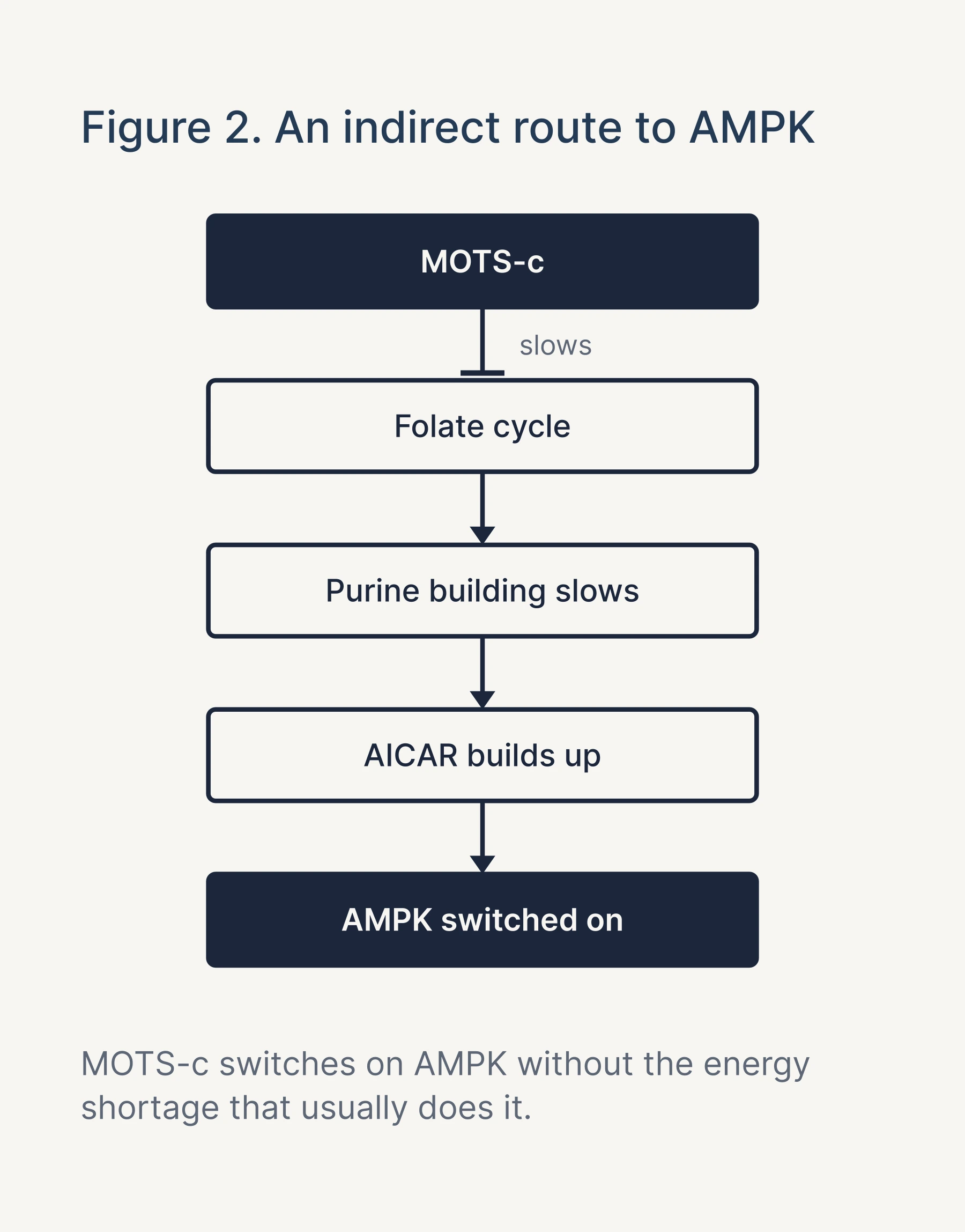
MOTS-c switches on AMPK, an enzyme that works as the cell’s energy sensor. AMPK normally turns on when energy runs low.
MOTS-c takes a side route. It slows the folate cycle, which the cell uses to build purines, the raw material for DNA. A compound called AICAR then builds up, and AICAR switches on AMPK.
The result is AMPK activity without the energy shortage that usually triggers it.
Most signals travel from the nucleus to the mitochondria. MOTS-c can travel the other way.
4. It reaches the nucleus
Under metabolic stress, MOTS-c moves from the mitochondria into the nucleus, a finding published in 2018. There it influences which genes are switched on, including genes involved in stress responses.
That makes it one of the clearest examples of mitochondria sending a peptide signal to the nucleus.
5. What the research explores
- Metabolism in mice. In the 2015 study, MOTS-c prevented diet-induced weight gain and insulin resistance in mice.
- Exercise. Levels rise in human skeletal muscle after exercise.
- Age. Some studies report lower levels in older people and older animals.
- Other models. Work has extended to inflammation, bone and muscle.
6. A note on the evidence
MOTS-c research is about a decade old, which is young for a peptide. The animal work is broad and the main mechanism is well described.
Human data is limited. A modified version of MOTS-c, called CB4211, reached early clinical trials. MOTS-c itself has not completed a clinical trial.
How OPtide tests MOTS-c
- Batch MS202607: identity confirmed, purity 99.434%, 19.84 mg measured against a 20 mg label, sterility passed, heavy metals not detected.
- Published: results are shown per batch, with links to Janoshik’s own records.
A note on research use
OPtide compounds are supplied for laboratory research only. They are not for human consumption.
Sixteen amino acids. Fully documented.
Every MOTS-c batch is tested by Janoshik, and the results are published before purchase.