
Organized. Keeping a research stock in order.
Topic tag: Field Notes
Read time: 4 min read
On This Page
Key takeaways
Every vial should trace back to its batch number, and every batch number to its lab results.
Sort the freezer by compound, with the oldest batch at the front.
Keep one log, with one line for each event: received, opened, moved, finished.
Check stock against the log once a month. Small gaps are easy to fix early.
1. Why order is part of the research
A result only means something if you can say what produced it: which compound, which batch, and how it was stored.
Without that, two results that disagree cannot be explained, and two that agree cannot be trusted. Keeping a stock organized is how you keep that information attached to the work.
2. Label once, label well
Each vial keeps its batch tag. If you add your own label, four details cover it: compound, batch number, date received and date opened.
- Use a waterproof marker or a printed label. Frost and condensation smudge ordinary ink.
- Label anything you split. Material taken from a vial carries the same batch number as its source.
- No blank containers. If it is not labeled, it cannot be used in a result you want to keep.
3. Sort the freezer
A freezer that is sorted saves time and prevents mistakes:
- One section per compound. A box each, or a row each in a shared box.
- Oldest batch at the front. It gets used first, so stock does not sit past its date.
- Opened apart from sealed. Keep opened material clearly separate, so nobody reaches for the wrong vial.
- At the back, away from the door. Temperature is steadiest there.
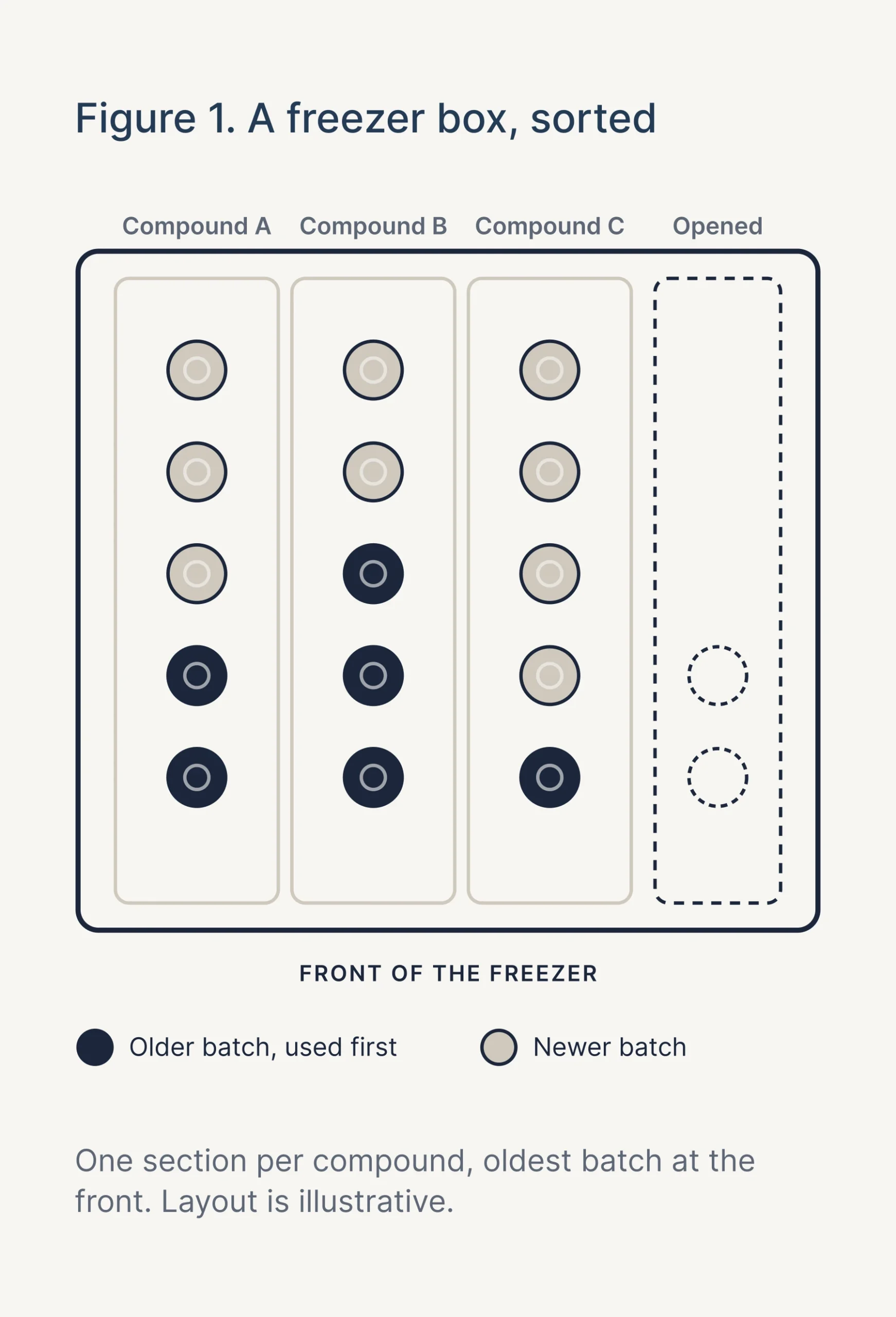
If you cannot say which batch produced a result, the result is hard to use.
4. One log, one line per event
A log works best when it records events, not just vials. Each time something happens, add a line:
- Date
- Compound and batch number
- Event: received, opened, moved or finished
- Notes: anything unusual, such as a power cut or a late delivery
Paper works. A spreadsheet is easier to search. Either way, a photo of each batch tag is a useful backup.
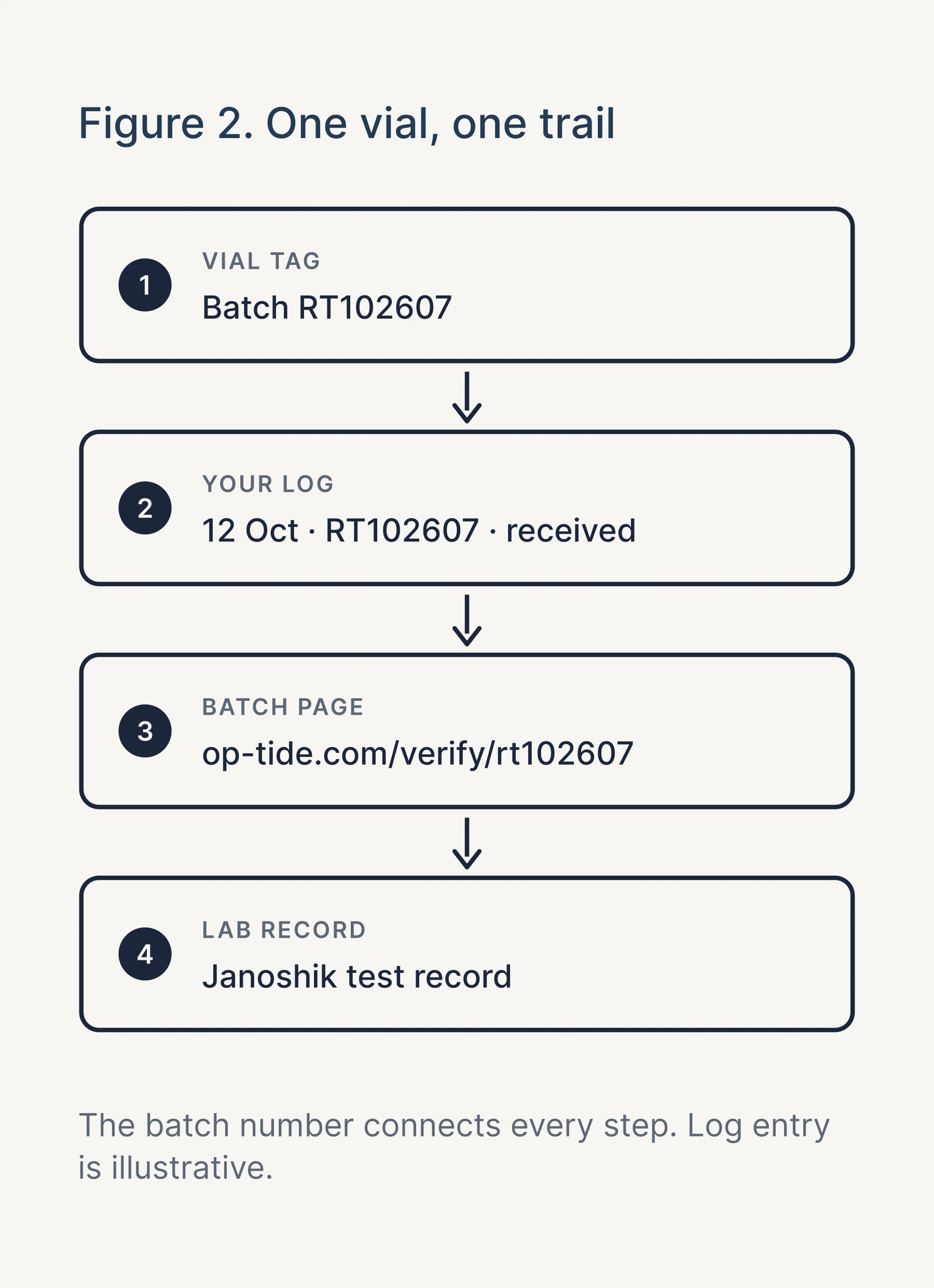
5. Link each batch to its results
Every OPtide batch has its own verification page, at op-tide.com/verify/ followed by the batch number. It holds the lab results, the test date and the expiry date, with links to the lab’s own records.
Save that link in your log next to the batch. The trail then runs from the vial tag, through your log, to the batch page and the lab. If any step is missing, the result can no longer be traced.
6. A monthly check
Once a month, take ten minutes:
- Count. Compare what is in the freezer with what the log says should be there.
- Read the thermometer. Note anything outside the usual range.
- Check dates. Move batches that are closer to their expiry date to the front.
A gap found after a month is a small note. A gap found after a year is a lost record.
How OPtide helps you stay organized
- Batch numbers: every vial comes with its batch number.
- One page per batch: lab results, test date and expiry date sit together on its verification page.
- Lab links: each result links to Janoshik’s own record.
- A person to ask: questions about a batch go to a real person on WhatsApp or by email.
A note on research use
OPtide compounds are supplied for laboratory research only. They are not for human consumption.
Every vial, traceable.
Each batch number leads to its own verification page, with links to the lab’s records.