Abroad. Keeping research on track while away.
Topic tag: Field Notes
Read time: 4 min read
On This Page
Key takeaways
Do not carry research material across borders. Plan the work around the trip instead.
What stays behind is only as safe as your freezer and the people who can open it.
A min/max thermometer tells you what happened while you were gone, not just what is happening now.
Time new orders to arrive after you are back, not while the house is empty.
1. Leave the vials at home
Taking research material abroad means customs checks, rules that change from country to country, and hours in luggage holds you cannot control. It is rarely worth the risk.
The better approach is to plan the work around the trip. Material that stays in a reliable freezer at home is in a much better place than material in a suitcase.
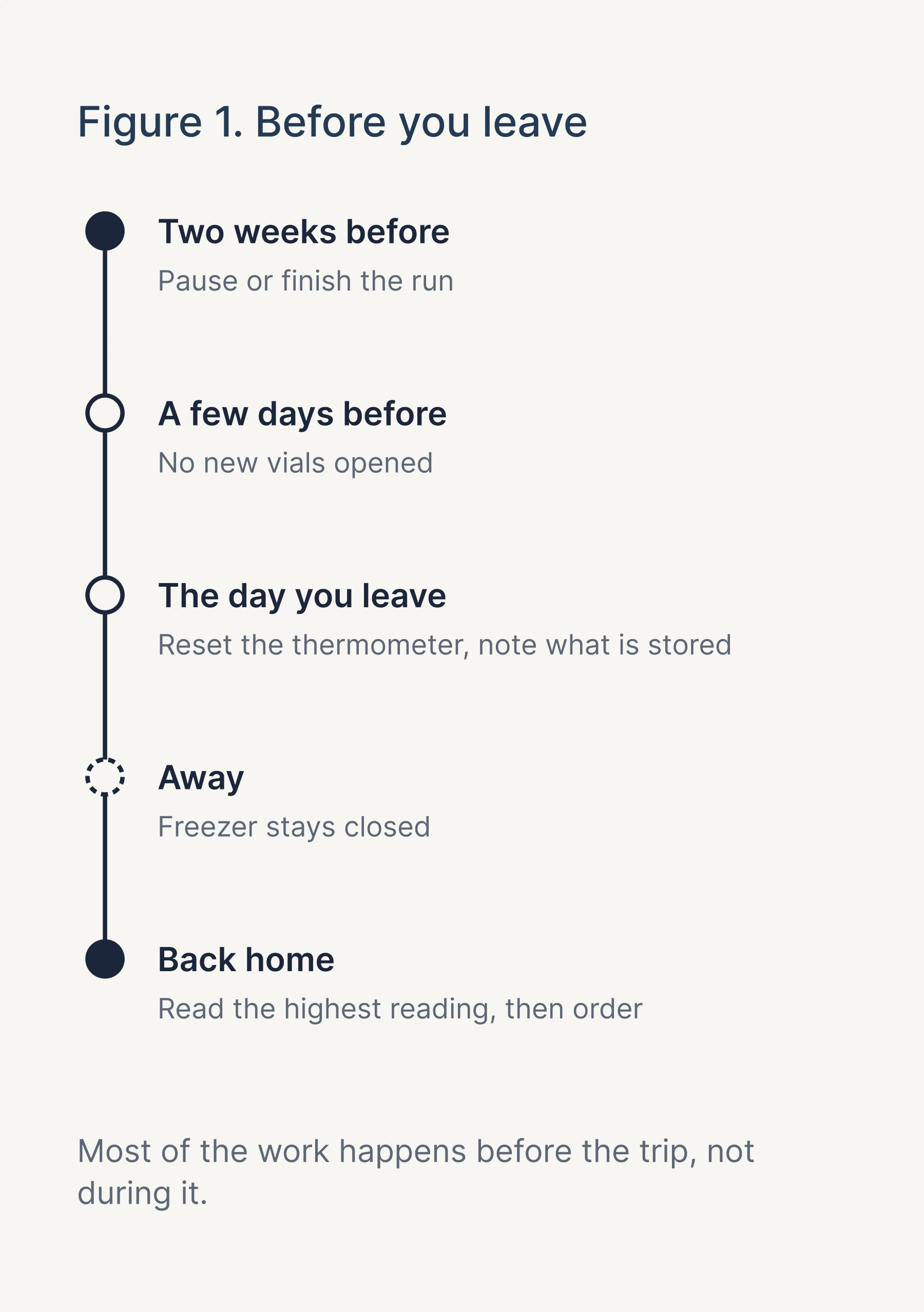
2. Time the work around the trip
A trip is easier to manage when it falls at a natural pause in the research. A few habits help:
- Do not open a new vial just before leaving. Opened material is harder to store well while you are away.
- Finish or pause a run before you go. A half-finished run with a two-week gap in the middle is hard to compare later.
- Order for after the trip. A delivery that arrives to an empty house waits in the heat.
3. Protect what stays behind
Unopened vials are kept frozen, so the freezer is what matters most while you are away. Check three things before you leave:
- Power. Short cuts are common in parts of Indonesia. A full, closed freezer holds its temperature longer than an empty one.
- Access. Cleaners, house staff or housemates sometimes defrost a freezer or unplug it to save power. Tell them it must stay on and stay closed.
- Labeling. A clearly marked box at the back of the freezer is less likely to be moved or thrown out.
A freezer is only as reliable as the people who can open it.
4. Know what happened while you were gone
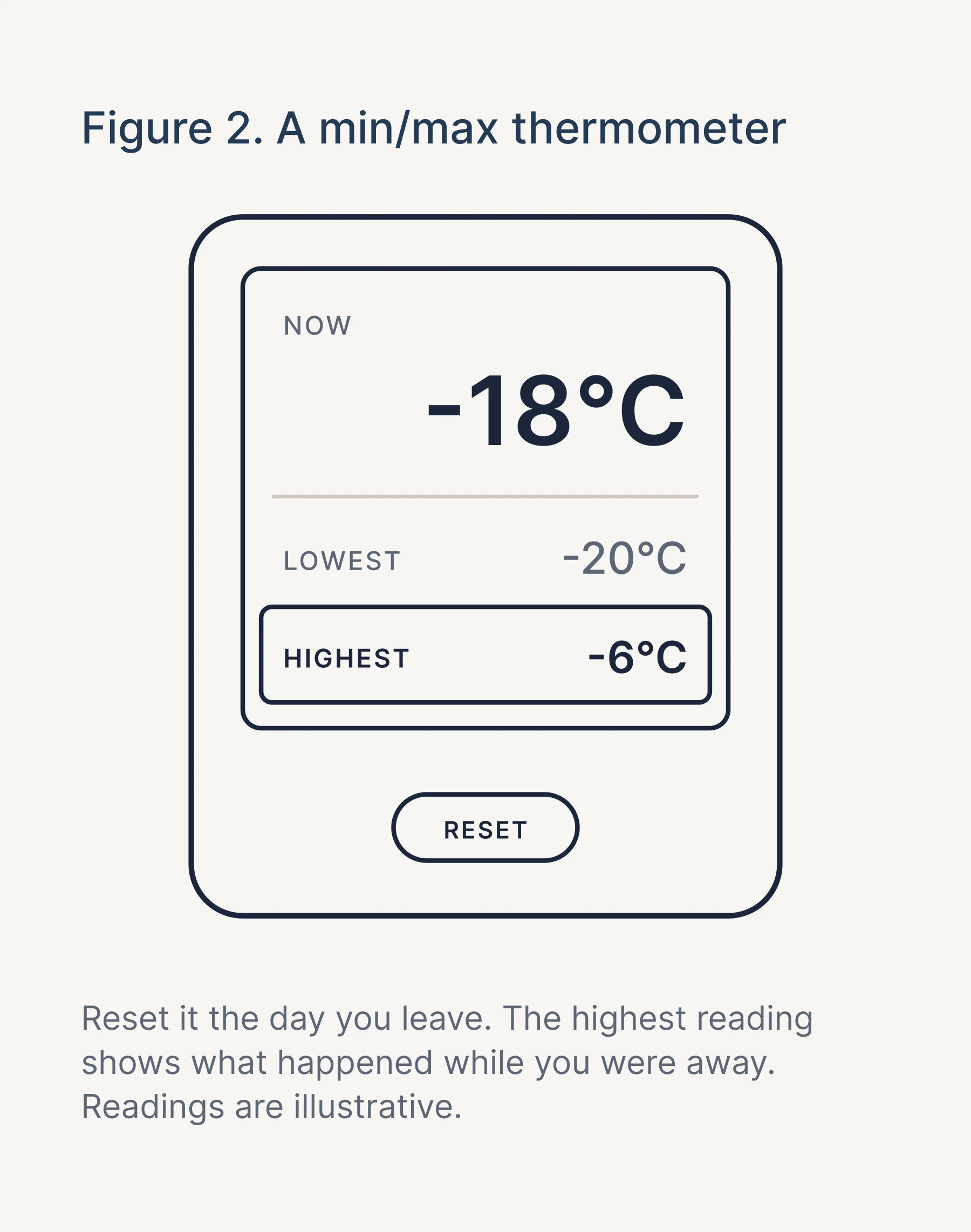
A normal thermometer only shows the temperature right now. A min/max thermometer also records the highest and lowest readings since you last reset it.
Reset it the day you leave. When you return, the maximum reading shows whether the freezer warmed up while you were away, and roughly how far. It is an inexpensive way to replace guessing with a number.
5. Write it down before you go
Records slip most easily around travel. Before leaving, note what is stored, with batch numbers and dates. When you return, add the min/max reading and anything unusual, such as a power cut a neighbor mentioned.
Each OPtide batch has its own verification page, which keeps the lab results with the batch number. Your own log covers the rest.
6. Picking up again
On your return, read the thermometer before anything else. If the maximum stayed low, carry on as planned.
If it rose a long way, treat that material with caution. Heat damage does not usually show on freeze-dried powder, so a vial that looks normal can still have changed. When in doubt, ask before you continue.
How OPtide helps around a trip
- Order on your return: in Bali and Jakarta, orders arrive by instant or next-day delivery, so there is no need to stock up before leaving.
- Records kept for you: every batch keeps its lab results on its own verification page.
- A person to ask: questions go to a real person on WhatsApp or by email.
A note on research use
OPtide compounds are supplied for laboratory research only. They are not for human consumption.
Back home? Next day is soon enough.
Order when you return, and it reaches you by instant or next-day delivery in Bali and Jakarta.