Visiting. Keeping research on track in Bali or Jakarta.
Topic tag: Field Notes
Read time: 4 min read
On This Page
Key takeaways
Source locally rather than carrying material in. It skips customs and long transit.
Check your storage before the order arrives. Many minibars are warmer than they look, and some have no freezer at all.
Plan for power cuts and humidity. Both are part of daily life in the tropics.
Keep a simple log from day one. Batch numbers and dates are what make results comparable later.
1. Source it here, not from home
Bringing research material across a border means customs checks and rules that differ from country to country. It also means hours in transit and in luggage areas you cannot control.
Ordering locally removes both problems. Stock that is already in Bali or Jakarta reaches you in hours rather than days, and never passes through customs.
2. Check your storage first
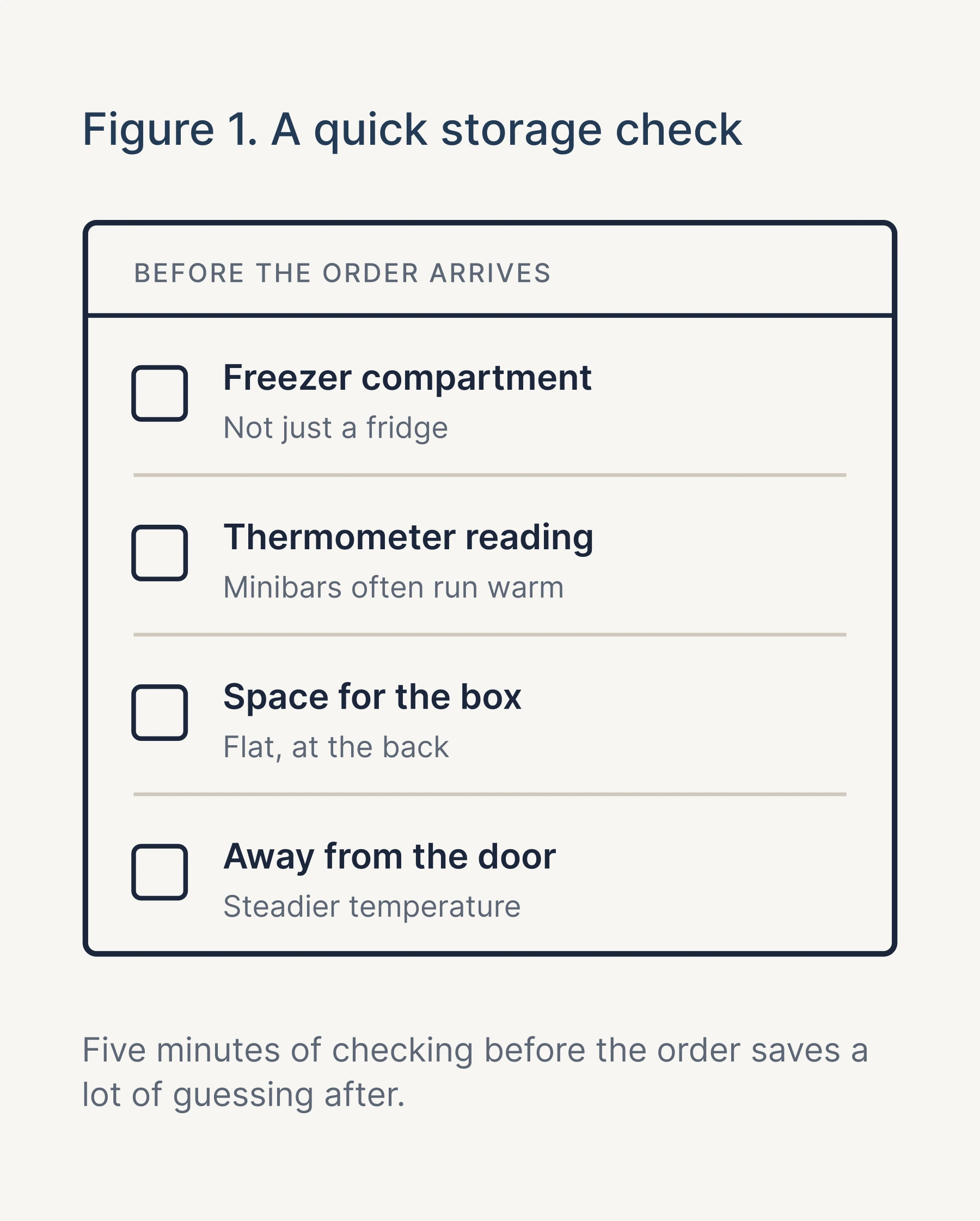
Before ordering, look at what your accommodation actually offers. Unopened vials are kept frozen, so you need a freezer compartment, not just a fridge.
A few things to check:
- Freezer or not. Many hotel minibars and small villa fridges have no freezer compartment.
- Real temperature. Minibars are often warmer than a kitchen fridge. A small fridge thermometer costs very little and settles the question.
- Shared kitchens. In a shared villa, a labeled box at the back of the freezer avoids accidents.
3. Receiving at a villa or hotel
Deliveries in Bali and Jakarta often go to a reception desk or a villa manager. Tell them a parcel is coming and ask them to call you when it arrives.
Your tracking link comes by WhatsApp or email, so you can time it. If you will be out, ask reception to keep the sealed parcel somewhere cool and shaded until you return. Then move it to the freezer as soon as you can.
The weak point is rarely the trip. It is the hour the parcel waits at reception.
4. Power cuts and humidity
Short power cuts happen in parts of Bali, especially in the rainy season. A closed freezer stays cold for a good while, so the best move during a cut is to leave the door shut.
Humidity is the other constant. Keep vials sealed in their packaging until you need them. When a cold vial meets warm, humid air, water condenses on it. Let a sealed vial reach room temperature before opening it, as our After receipt guide explains.
5. Keep a simple log
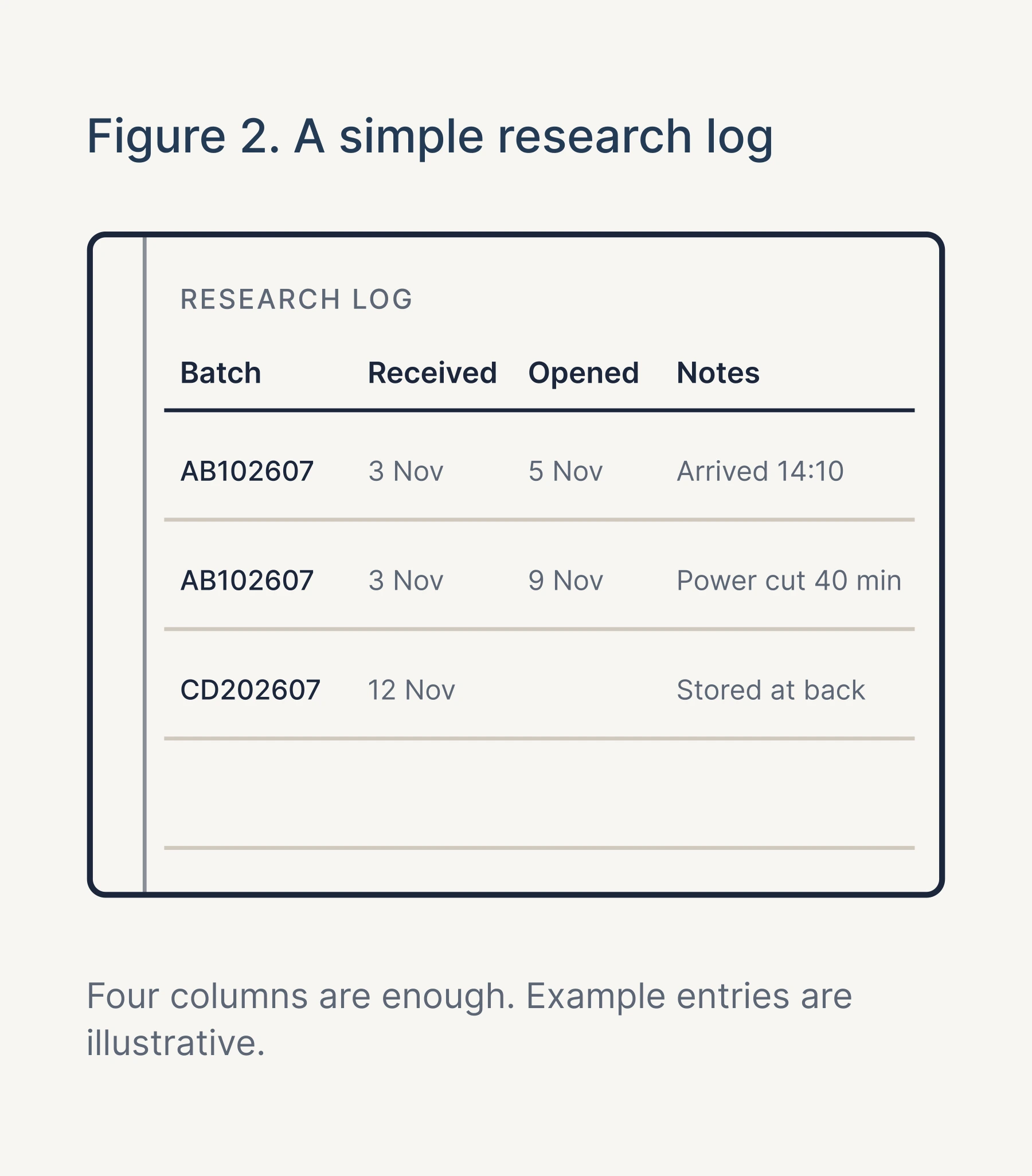
A short stay is exactly when records slip. A log does not need to be complex. Four columns cover most of it:
- Batch number, from the vial or its tag.
- Date received.
- Date opened.
- Notes, such as a power cut or a delayed delivery.
Each OPtide batch also has its own verification page, which keeps the lab results with the batch number in one place.
6. Plan the end of your stay
Order quantities that match the time you have. Material left behind in a villa freezer is material no one is tracking.
If your research continues at home, source it there rather than carrying vials across a border.
How OPtide helps when you are visiting
- Local stock: held in Bali and Jakarta, so orders never wait in customs.
- Fast delivery: in Bali and Jakarta, orders arrive by instant or next-day delivery.
- Tracking: every order gets a tracking link by WhatsApp or email.
- A person to ask: questions about an order go to a real person on WhatsApp or by email.
A note on research use
OPtide compounds are supplied for laboratory research only. They are not for human consumption.
Already in Bali and Jakarta.
Stock in Bali and Jakarta, delivered to wherever you are staying.