
KPV. Three amino acids, decades of study.
Topic tag: Compound Profiles
Read time: 2 min read
On This Page
Key takeaways
Three amino acids. One specific pathway. Two decades of preclinical evidence.
The research focus is gastrointestinal and dermal models, with a consistent interest in how inflammation starts, not just how it presents.
KPV is derived from α-MSH, but behaves differently from it. That distinction is why it is studied.
1. What KPV is and where it comes from
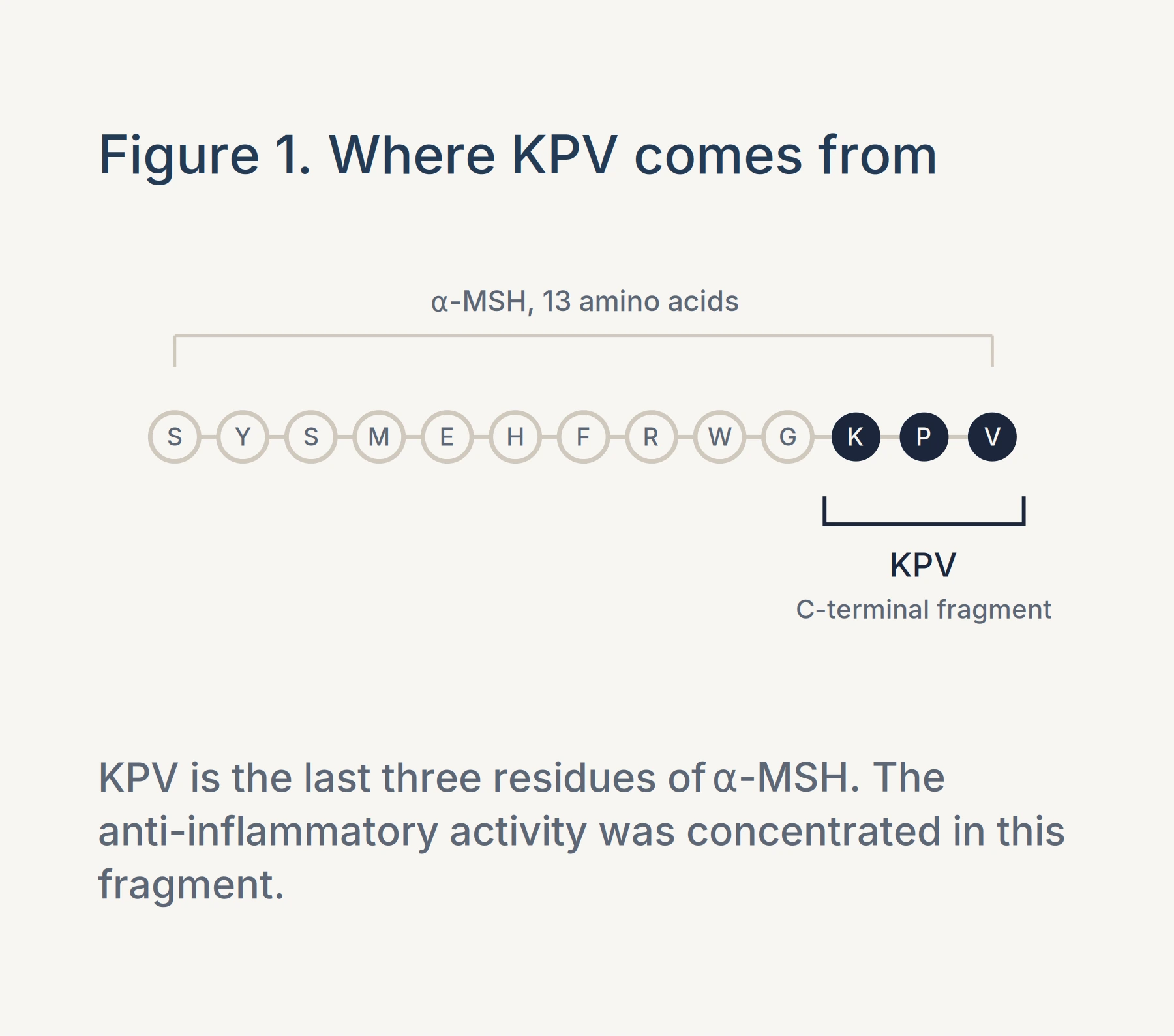
KPV, Lysine-Proline-Valine, is a tripeptide derived from the C-terminal sequence of alpha-melanocyte stimulating hormone (α-MSH), a naturally occurring hormone involved in regulating inflammation and immune response. Researchers identified that a significant portion of α-MSH’s anti-inflammatory activity was concentrated in this small terminal fragment.
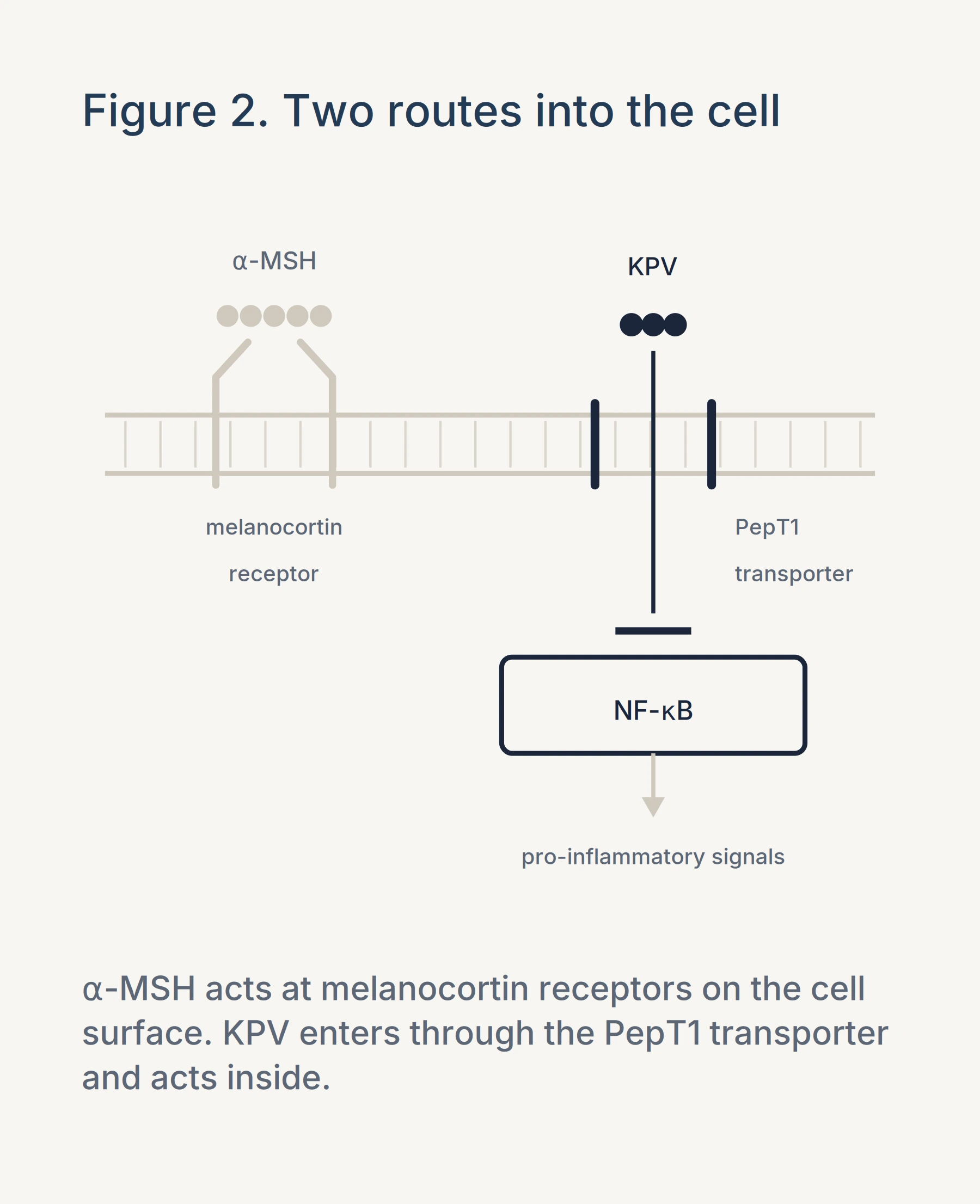
What made it a useful research tool is not just that the activity was preserved in a smaller structure. KPV does not bind melanocortin receptors, the pathway through which α-MSH works. Instead it enters cells through PepT1, a transporter found in intestinal and immune cells, and influences inflammation from the inside. It inherited the relevant properties without inheriting the broader mechanism.
Structural stability supports its use across experimental models, proline at position two provides resistance to enzymatic degradation.
2. How the mechanism works
KPV inhibits NF-κB activation, the signalling switch that instructs cells to produce pro-inflammatory compounds. It intervenes at a specific point in the inflammatory cascade rather than suppressing immune activity broadly. That specificity is what has made it a focused and consistent research tool.
3. What the research explores
The strongest evidence sits in gastrointestinal models, specifically intestinal inflammation, where the PepT1 transporter is highly expressed and where KPV has consistently reduced inflammatory markers and protected mucosal lining in animal studies. A secondary body of research covers dermal and wound healing models, where the absence of melanocortin receptor binding, and therefore no pigmentation effects, makes it a clean research tool for studying inflammation in skin tissue.
KPV does not suppress the immune system. It intervenes at one specific switch. That is the point.
4. A note on research context
KPV is supplied for preclinical and in vitro research purposes only. No published human clinical trials exist at this time.
Not for human consumption.
For compound specifications, batch documentation, and storage guidance, see the KPV product page.
Three amino acids. The full panel.
Every KPV batch is tested for identity, purity, endotoxins, microbes and heavy metals.