After receipt. A handling reference for lyophilized peptide compounds.
Topic tag: Handling & Storage
Read time: 4 min read
On This Page
Key takeaways
Aliquoting before freezing is the single most practical way to protect compound integrity over time.
Reconstitution starts a new clock. The stability conditions from that point are fundamentally different.
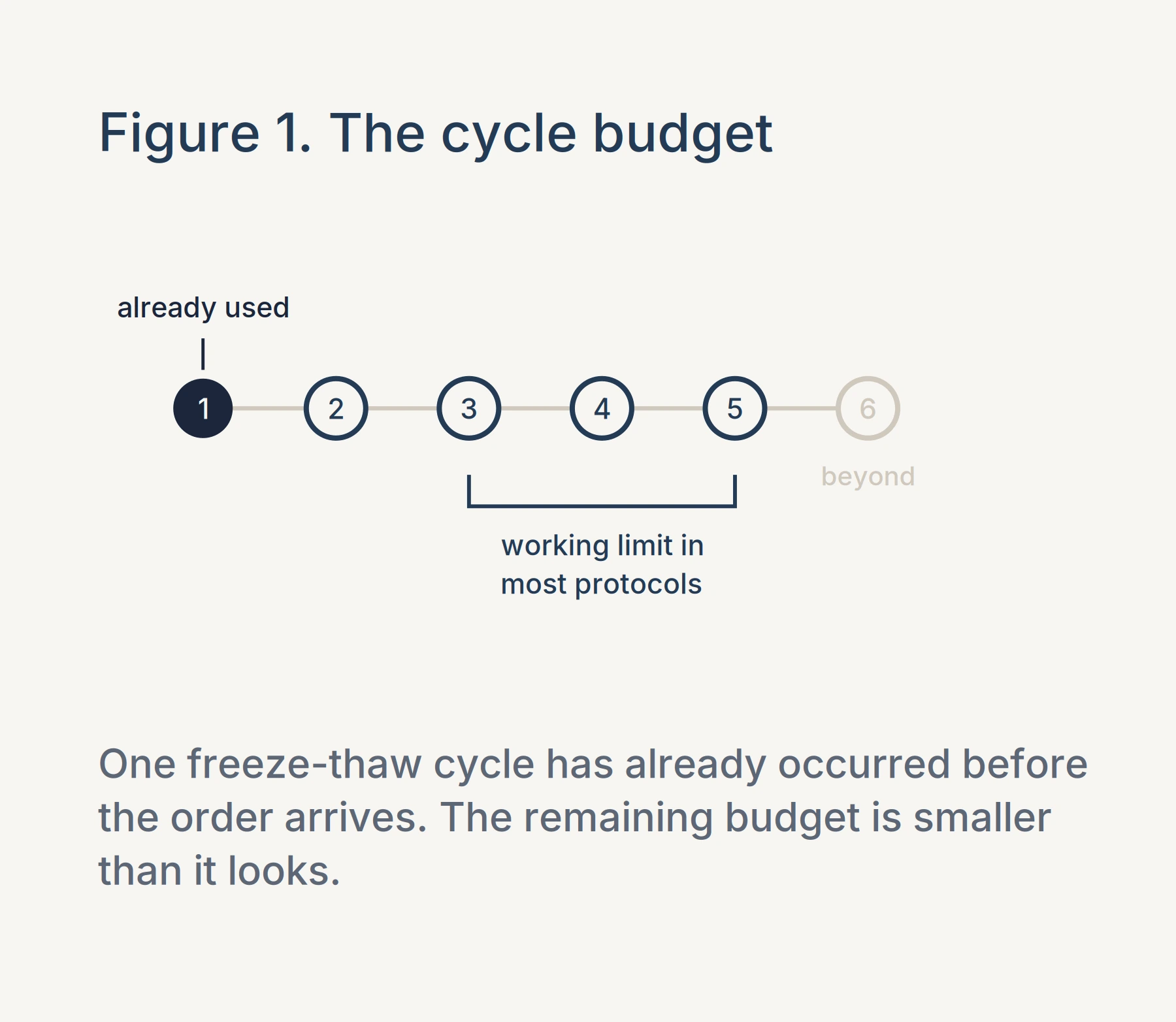
One freeze-thaw cycle has already occurred before an order arrives. That matters for how many remain.
Sterile technique is not optional, it is what keeps a reconstituted vial usable across multiple draws.
1. Freeze-thaw cycles
Each freeze-thaw cycle introduces mechanical stress through ice crystal formation and reintroduces a brief window of oxidative exposure during thaw. A single well-managed cycle on a lyophilized compound carries minimal risk. The concern is cumulative.
Most handling protocols treat three to five cycles as the working limit before compound integrity cannot be assumed. By the time an order arrives, one cycle has already occurred in the supply chain. That is within range, but it is not a reason to treat subsequent cycles as inconsequential.
2. Aliquoting
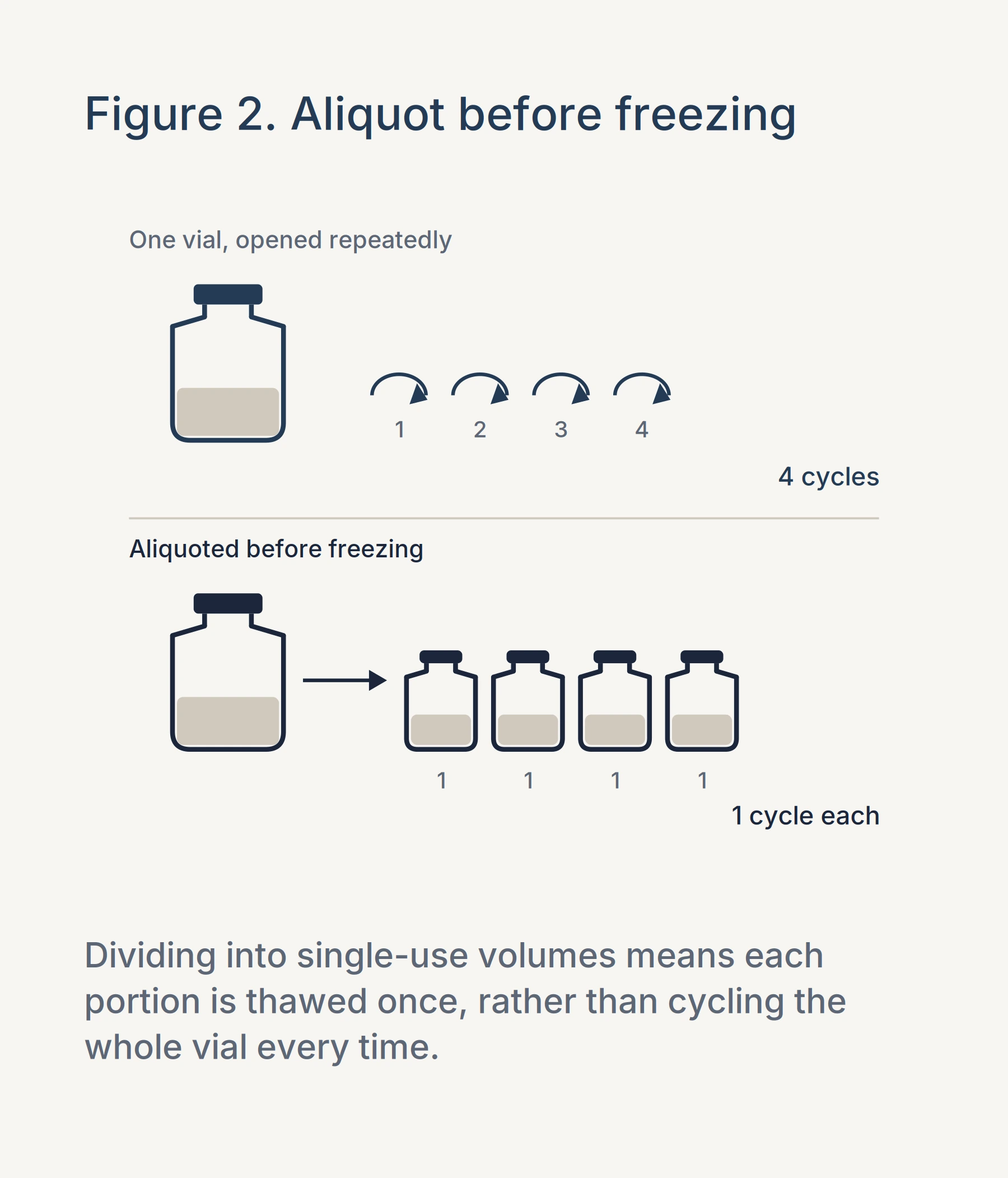
Aliquoting before freezing eliminates the need to cycle an entire vial repeatedly. Divide the compound into single-use volumes before storage. Each aliquot is opened once, used, and not returned to frozen storage. The remaining aliquots stay sealed until needed.
This is the most practical way to extend the usable life of a compound while staying within a safe freeze-thaw count. It requires planning before the first freeze, not after.
3. Reconstitution
Reconstitution with bacteriostatic water ends the protections lyophilization provides. The stability window compresses significantly from that point.
Add bacteriostatic water slowly to the vial. Do not shake. Roll or gently swirl until the powder dissolves fully. Shaking introduces air and mechanical stress that can damage peptide bonds. Allow complete dissolution before drawing the first dose.
Before reconstituting, check the bacteriostatic water vial. Discard it if the solution appears cloudy or discoloured. Cloudiness before reconstitution is a contamination indicator.
4. Storage and sterile technique
Once reconstituted, refrigerate at 2–8°C immediately. Room temperature storage is not viable, degradation begins within hours.
Swab the vial stopper with an alcohol swab before every draw. This maintains sterility across multiple uses and is the single most important routine step in post-reconstitution handling.
Do not return unused solution to the vial after drawing a dose. What has been drawn is exposed. What remains in the vial should stay sealed until the next use.
Handling determines whether the data on the Certificate of Analysis still applies. The COA documents the compound at the point of release, not at the point of use.
5. Compound-specific notes
GHK-Cu: do not freeze after reconstitution. Ice crystal formation at the reconstituted stage damages the compound’s copper-peptide structure in a way that cannot be reversed. Refrigerate and use within the recommended window.
Retatrutide: oxidation sensitivity increases after reconstitution. Seal integrity between draws is critical. Minimise the time the vial is open and keep it away from direct light.
GLOW: handle to the GHK-Cu standard. The blend’s ceiling is set by its most sensitive component.
All compounds referenced are for research purposes only. Not for human consumption.
Your records start on day one.
Every vial comes with a batch number that leads to its own verification page.