
What are peptides?
Topic tag: Peptide Science
Read time: 4 min read
On This Page
Key takeaways
Peptides are some of the most studied compounds in modern research, and most people have never heard of them.
The body produces them naturally. Synthetic versions allow researchers to study biological processes in precise, controlled conditions.
Not all peptides behave the same. Structure determines everything, and small changes matter more than expected.
Research-grade purity is not a marketing distinction. It determines whether findings mean anything at all.
1. What a peptide is
Proteins are the workhorses of biology. They build tissue, carry oxygen, regulate hormones, and drive almost every process that keeps an organism functioning. But proteins are large, chains of hundreds or thousands of amino acids, folded into complex three-dimensional structures.
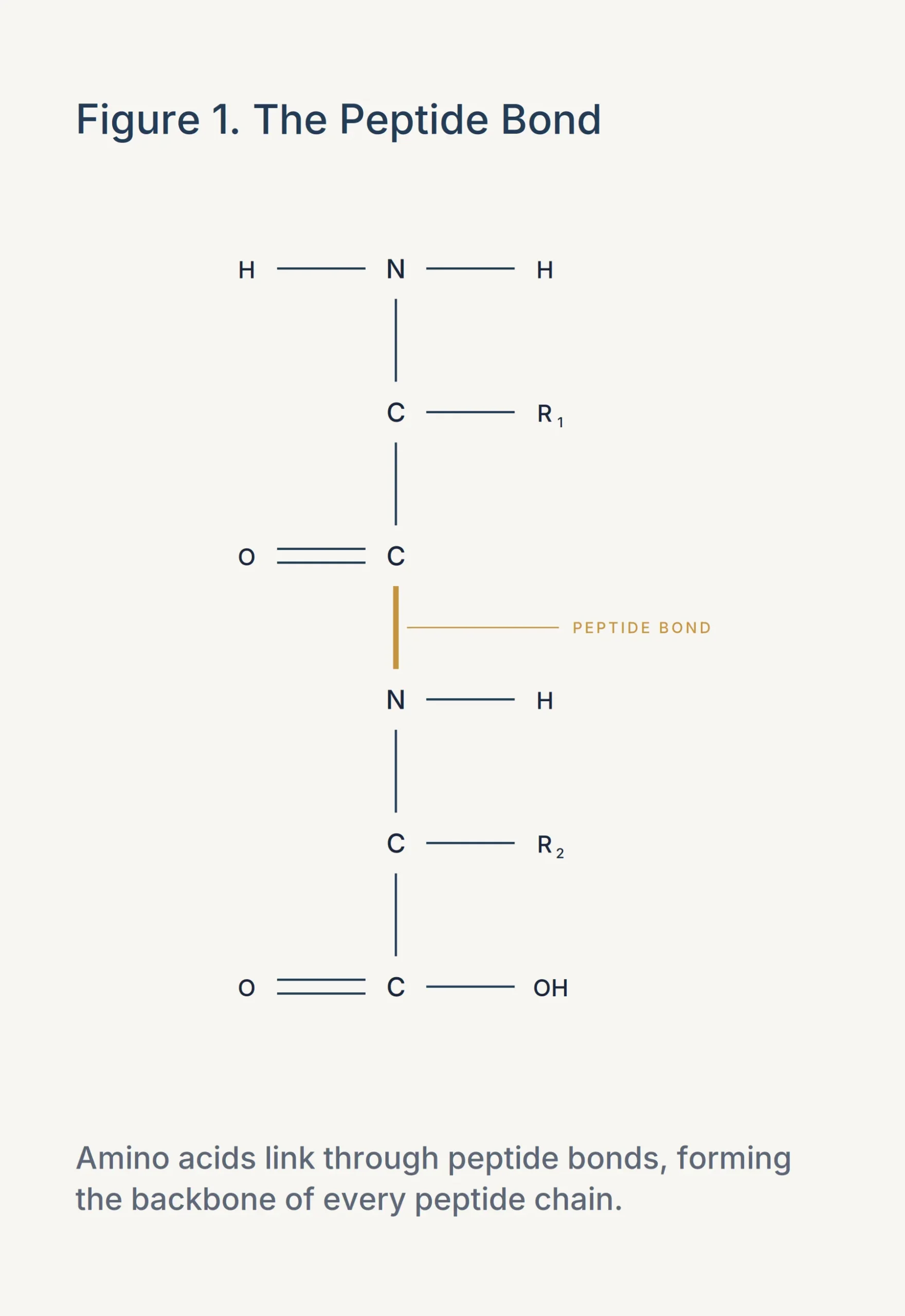
Peptides are smaller. A peptide is a chain of between two and fifty amino acids. Short enough to synthesise in a laboratory. Specific enough to interact with defined biological targets.
Think of amino acids as letters. Proteins are novels. Peptides are sentences, compact, precise, functional. The body produces peptides naturally. Insulin is a peptide. So is oxytocin. So are the signalling molecules that tell cells to repair, grow, or respond to damage. They are not exotic compounds. They are fundamental to how biology works. Synthetic peptides are laboratory-produced versions, designed to mirror or interact with naturally occurring sequences, under controlled conditions, for research purposes.
2. How they work
Peptide function is determined by sequence, the specific order of amino acids in the chain. That sequence shapes how the peptide folds, how it interacts with receptors, and what biological response it can influence.
Small changes in sequence lead to significant differences in behaviour. A single substituted amino acid can alter stability, binding specificity, or how quickly a compound degrades. This precision is what makes peptides valuable as research tools, and what makes purity and consistency so consequential.

3. What they are studied for
Peptide research spans a broad range of biological areas. Different compounds interact with different systems, metabolism, tissue repair, inflammation, cellular ageing, immune response. Each one works through a different mechanism, in a different context, on a different target.
That specificity is the point. A well-characterised peptide allows researchers to isolate and examine a single biological mechanism, without the complexity introduced by a larger or less defined compound. The same quality that makes them precise tools in a laboratory also makes them one of the most active areas of preclinical research today.
4. Why purity and grade matter
Not all peptides are equal. The same compound, produced to different purity standards, will behave differently in a research setting. Impurities introduce variables. Inconsistent batches produce findings that cannot be repeated.
Research-grade peptides should be manufactured to defined purity standards, confirmed by HPLC analysis, and supplied with documentation that ties each vial to a specific batch record. In practice, documentation quality across the market varies significantly. Traceability is not a given. It is what separates a compound that can be trusted from one that simply arrives in a vial.
A Certificate of Analysis documents a compound at the point of manufacture and release. Handling and storage conditions after that point determine whether the data on it remains accurate. Both matter equally.
Sequence is not just a description. It is the function.
5. A note on research use
All compounds covered in these resources are supplied for use in preclinical and in vitro research settings only. Not for human consumption.
The science referenced here reflects the current state of research, not clinical outcomes, and not guidance for personal use. The resources section covers handling protocols, COA interpretation, and compound-specific documentation in further detail.
Know the molecule. Check the batch.
Every OPtide compound is tested by Janoshik, with the results published for each batch.